Pattern Recognition
Two data center projects—one operational in urban Memphis, one proposed in rural Utah—exhibit a telling pattern.
Memphis TN
On May 6, 2026 Anthropic announced a partnership with SpaceX AI for 300 megawatts of capacity, the entirety of the Colossus 1 data center, including its 220,000 NVIDIA GPUs. In the same announcement the company raised or removed several usage limits on Claude Code, the company’s flagship developer product.
At Anthropic, we define “users” broadly. Users are our customers, policy-makers, Ants, and anyone impacted by the technology we build or the actions we take. We cultivate generosity and kindness in all our interactions—with each other, with our users, and with the world at large. Going above and beyond for each other, our customers, and all of the people affected by our technology is meeting expectations.1
At xAI, we are committed to being a good neighbor to all Memphians and a responsible partner in the community to create opportunities, reinvigorate the city’s industrial park and cement Memphis’ status as the Digital Delta, the nation’s leading AI technology hub. The foundational pillars that support this vision and partnership are our efforts around building sustainability and community.2
The Colossus 1 data center sits in the Frank C. Pidgeon Industrial Park located in southwest Memphis where an Electrolux appliance factory once stood. It was originally built by Elon Musk’s xAI business and is now owned by SpaceX AI after the two companies merged. The project was announced in June 2024.3 The first 174 megawatts of capacity was brought online in September 2024.4 The facility reached full capacity in May 2025.5
As with most data center projects, the biggest challenges were power and cooling.
Power
xAI planned to operate 15 gas turbine generators on-site to provide primary power until the local grid could be upgraded to accommodate the facility’s needs.
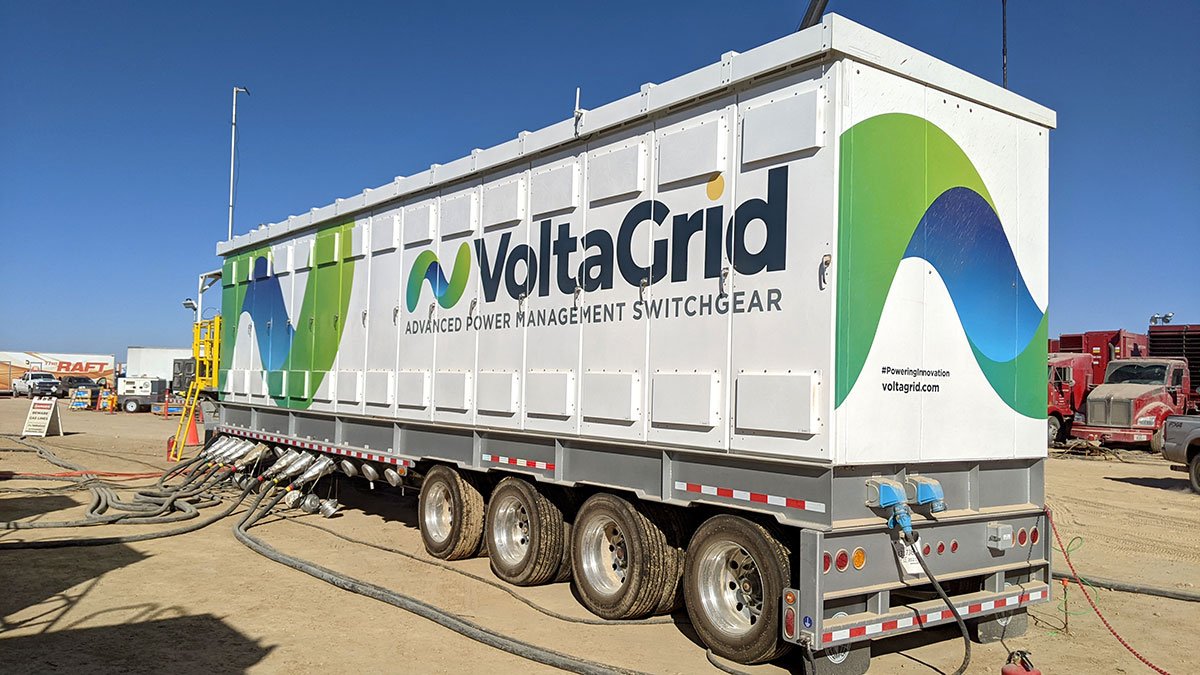
In June 2024, xAI began operating a fleet of turbine generators on-site. The company claimed their generator use was covered by a section of the EPA’s New Source Performance Standards written to cover “non-road” engines like lawn mowers, small residential backup generators, and light construction equipment. xAI argued that since the generators were technically mobile and stayed at one location for less than 364 days, they should be classified as non-road engines and therefore not require a permit. The Shelby County Health Department agreed.
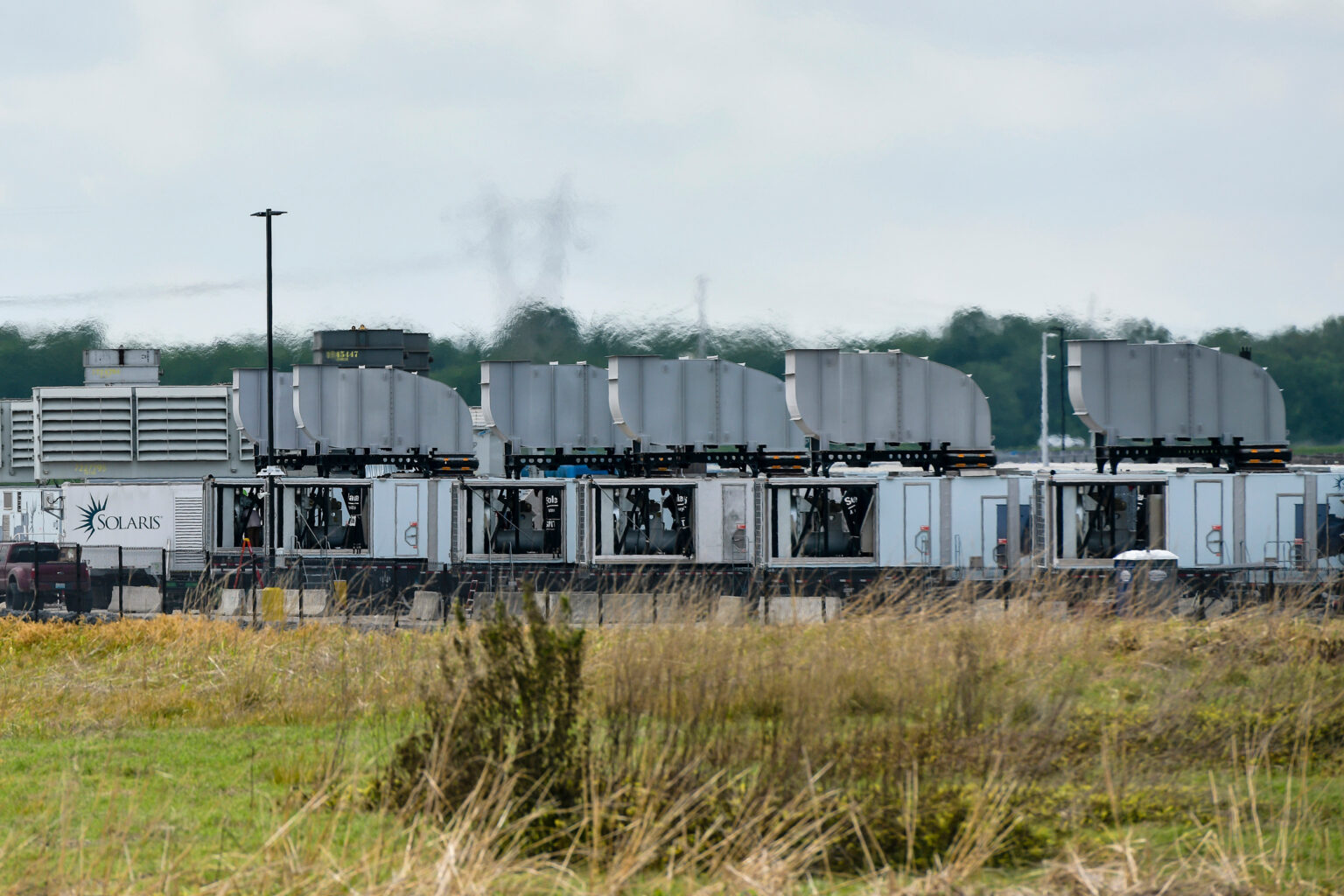
In August 2024, the first reports surfaced of xAI’s use of as many as 20 gas turbine generators.6
The predominantly Black South Memphis neighborhoods closest to Colossus 1 have dealt with industrial pollution for decades. The surrounding 38109 ZIP code hosts 17 industrial polluters including a closed steel mill and coal ash storage site. The cancer risk from industrial sources is 4.1 times the EPA’s acceptable threshold. Shelby County carries an “F” grade for ozone from the American Lung Association. It also has the highest pediatric asthma hospitalization rate in Tennessee.7
Colossus 1’s generators will emit over a thousand tons of smog-causing nitrogen oxide per year, making the facility the largest emitter of nitrogen oxide in the eleven-county Memphis metro area.8 Residents in the Boxtown neighborhood have testified at public hearings about a rotten-egg stench in the air and the worsening impact of smog on their heart and lung health.9
In early January 2025, xAI filed a permit application with the Shelby County Health Department for 15 permanent gas turbine generators operating through 2030.810
In April 2025, the Southern Environmental Law Center (SELC) filed a formal notice of intent to sue on behalf of the NAACP over the environmental impact of the generators. Aerial imagery of the site revealed approximately 35 gas turbine generators in operation. In response, xAI removed the unpermitted generators in June 2025.8
In early July 2025, the Shelby County Health Department announced approval of xAI’s air permit application for 15 methane gas turbine generators.11
In January 2026, the EPA issued formal guidance clarifying that stationary industrial gas turbines used as primary power do not qualify for the non-road exemption, regardless of whether they are technically mobile or stay on-site for less than a year. The clarification did not address xAI’s existing turbines, which the company continued to operate. xAI applied for permits to cover additional generators, while declining to seek permits for the equipment that prompted the EPA’s clarification.9
xAI had previously committed to installing state-of-the-art pollution controls, known as selective catalytic reduction technology, to reduce the environmental footprint of the site. Solaris Energy Infrastructure, the company supplying the generators, has said the technology was never installed on the “temporary” turbines.9
Cooling
The Colossus 1 data center uses water-based cooling systems to keep the hundreds of thousands of computers and GPUs cool and operational.
In February 2025, xAI offered to purchase approximately 13 acres of city property adjacent to the T.E. Maxson Wastewater Treatment Plant for a water recycling facility. Mark Carroll, an xAI engineer, told the Memphis City Council the facility will divert 20% of municipal wastewater, clean it, and supply it to xAI, the nearby TVA power plant, and a Nucor steel mill located in the same industrial park. Carroll estimated the recycling facility would reduce demand on the Memphis Sand aquifer by 9%.12
In mid-March 2025, the Memphis City Council gave final approval for the land sale to xAI for the water recycling plant. The agreement also allows the city to repurchase the land for $1.00 if xAI fails to make significant progress.13 The ceremonial groundbreaking for the facility occurs in October 2025. Carroll describes the facility as “the world’s largest ceramic membrane bioreactor wastewater recycling system.”14
In January 2026, the Tennessee Department of Environment and Conservation approved xAI’s operations permits for the water recycling plant. The company also files seven additional construction permits totaling over $17 million.
In March 2026, Mark Carroll said, in an interview, that weather delays and other factors made the end-of-2026 completion target hazy.15
On April 8, 2026, xAI decided to halt construction.16 Several high profile stakeholders including Doug McGowen, CEO of Memphis Light, Gas and Water (MLGW),17 and Memphis Mayor Paul Young18 issued statements indicating they had not been consulted when the decision was taken.
On the same day, the Daily Memphian published confirmation from an xAI engineer that the project was “indefinitely paused.”16
On April 10, 2026, Doug McGowen released a longer statement confirming he heard about the delay through the media. In his statement he also highlighted that, at the beginning of the project, MLGW engineers estimated construction costs for the facility at $200 million and shared their estimates with xAI. xAI was optimistic they could build the facility for $80 million.17
With the water recycling plant indefinitely paused, MLGW reported xAI requested up to 3.7 million gallons of drinking water per day—roughly the equivalent of 18,500 households.1920
Present Day
By late April 2026, all of xAI’s training workload for their own model, Grok, had been moved to their Colossus 2 data center located approximately two miles from Colossus 1.21 Colossus 2’s power needs are served by a SpaceX AI-owned power plant located just across the state line in Southaven, Mississippi, approximately twelve miles south of Memphis and two miles from Colossus 2.
On April 14, 2026, the NAACP, SELC, and Earthjustice filed new litigation over the use of unpermitted gas turbine generators at the Southaven power plant.
On May 6, 2026, SpaceX and Anthropic announced an agreement for Anthropic to use all of Colossus 1’s compute capacity.2223 On the same day, the NAACP announced their request for a preliminary injunction against xAI seeking the immediate shutdown of the Southaven power plant.24
The water recycling facility remains on indefinite pause.
Box Elder County UT
The Stratos Project Area brings together MIDA, Box Elder County, state leaders, local landowners, Hill Air Force Base, the Utah National Guard, and the development team around a shared goal: strengthening Utah’s role in national security, energy resilience, and next-generation technology infrastructure. The project is designed to support military readiness by providing reliable energy, compute power, and data storage for defense operations, while also generating revenues that can support critical infrastructure projects at Hill Air Force Base and the Utah National Guard. For Box Elder County, the project creates a structured partnership with negotiated guardrails, including local involvement through the interlocal agreement, continued planning, and a future Design Review Committee with representation from county expert staff and a local landowner.25
The proposed Stratos data center campus site sits in Box Elder County, Utah on 40,000 acres of high desert approximately forty miles west of the Great Salt Lake.
In January 2026, Kevin O’Leary, a Canadian businessman and reality TV host, met with Utah Governor Spencer Cox and discussed what will become the Stratos data center project.26
The project plans describe a large data center campus roughly the size of Washington, D.C.27 It will require nine gigawatts of power, which will be generated by on-site gas turbine generators similar to the ones used at Colossus 1 and 2. Estimated emissions range from 30 to 41 million metric tons of CO2 per year, depending on generator type and fuel.28 That would represent a 60 to 75 percent increase above Utah’s 2023 emissions.29
The Stratos project also plans to use water cooling extensively. The project developers estimate they will need approximately 4.2 billion gallons per year—roughly the equivalent of 16,000 Utah households.30
In March 2026, the Bar H ranch filed a water rights change application with the Utah Division of Water Rights seeking to reclassify 1,900 acre-feet per year of the Salt Wells Spring Stream from agricultural to industrial use under the name “Wonder Valley”.31 If approved, the reclassification would increase the market value of the rights and allow their sale to support Stratos’ water needs.
On April 24, 2026, Utah’s Military Installation Development Authority (MIDA) unanimously approved the creation of the Stratos Project Area and a development agreement with O’Leary Digital Utah Development Company.32 MIDA was created by the Utah legislature in 2007 to support military missions and economic development. The agency’s structure allows it to override local zoning in designated areas.33
On May 4, 2026, a special meeting of the Box Elder County Commission was held in the Fine Arts Building at the Tremonton fairgrounds. Approximately 1,100 people attended. Hundreds more protested outside. The commission opened the meeting with an announcement that there would be no public comment period. The large audience erupted in anger, which forced the commissioners to relocate to a private room where they conducted their meeting via broadcast. Two resolutions were passed unanimously. Resolution 26-11 granted county consent to MIDA to proceed with the project. Resolution 26-12 established an agreement between the county and MIDA providing what the commissioners describe as “guardrails”.34
On May 6, 2026, a referendum application targeting Resolution 26-11 was filed with Box Elder County with two dozen sponsors.35
Two Communities
Memphis and Box Elder County differ in race, climate, and geography. They share a single relevant feature: limited political and legal resources to oppose projects like Colossus 1 and Stratos. These communities are politically weak.
What conditions are favorable to these large capital projects? What’s their selection criterion? No one looked at a map and picked Memphis because it’s a predominantly Black city or Box Elder County because it’s rural. Both offer something else: very low legal, political, and regulatory friction. The affected communities aren’t accidentally weak, either. Their political position has been produced over decades by the same selection criterion operating through earlier instruments like eminent domain, redlining, and deindustrialization.
Tomorrow
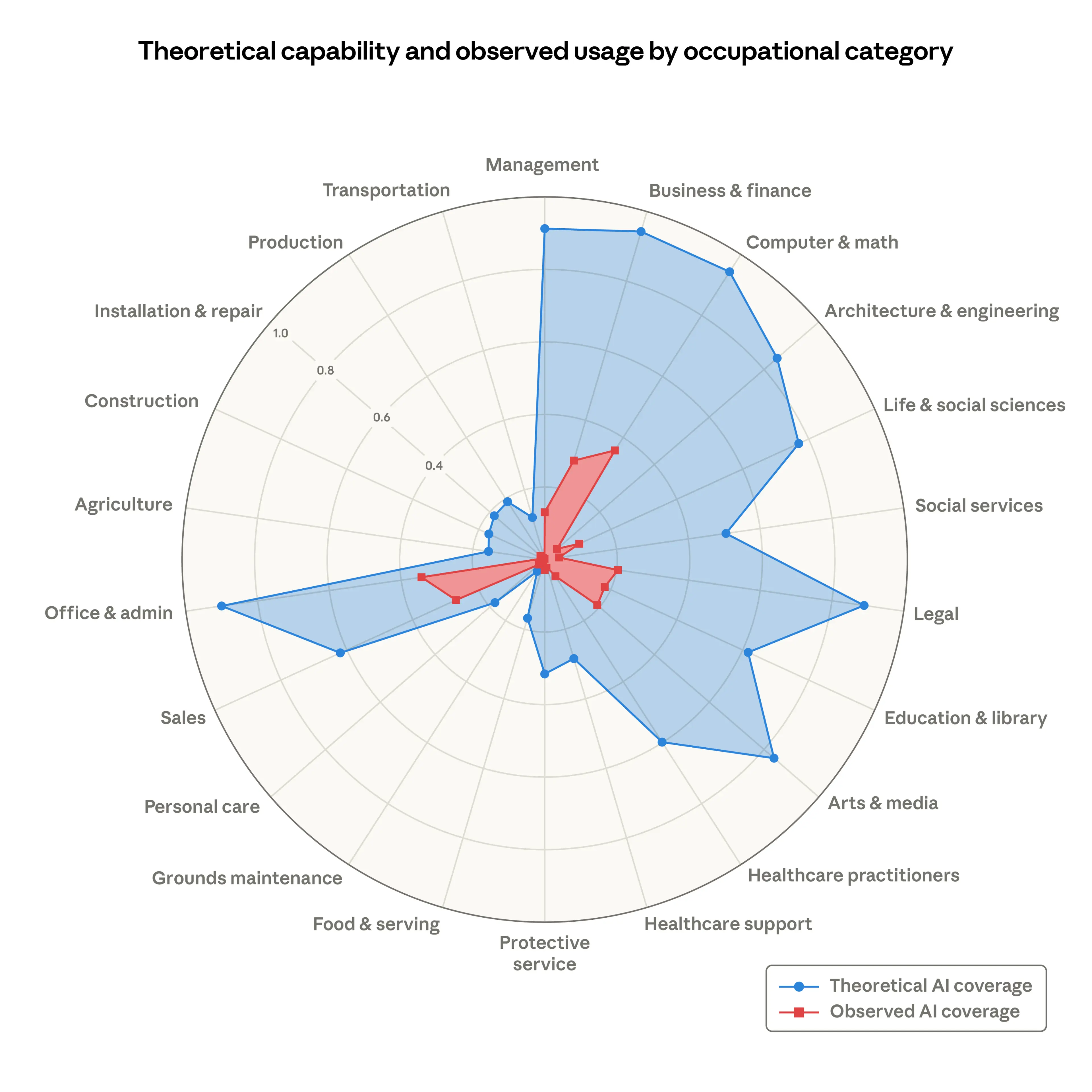
Anthropic’s own research on labor market impacts classifies knowledge worker occupations among the categories with the highest exposure to frontier model capabilities.36 The Claude Code limits raised in the SpaceX/Anthropic announcement benefit primarily these same categories.
Manufacturing workers who faced earlier waves of automation inherited institutional protections built over generations: unions with collective bargaining power, occupational licensing, civil service tenure. The Bureau of Labor Statistics reports union membership among software developers at roughly 3.7%. Other professions have much higher union involvement: service workers (31.3%), education (32.5%), construction (16.4%), and manufacturing (7.7%).37
Professional associations in technology function as credentialing and networking bodies, not political counterweights. Civil service protections cover a small fraction of the affected workforce. Until recently knowledge workers had labor market scarcity—the leverage that comes from being difficult to replace.
xAI - Our commitment to Memphis. ↩︎
Memphis Chamber of Commerce - Velocity meets potency: xAI announces Memphis as new home. ↩︎
Memphis Chamber of Commerce - xAI economic development page. ↩︎
HPCwire - Colossus AI hits 200,000 GPUs as Musk ramps up AI ambitions, May 2025. ↩︎
Reuters - Musk’s xAI operating gas turbines without permits, environmental group says, Aug 2024. ↩︎
CNN - xAI Musk Memphis turbines pollution, May 2025. ↩︎
Southern Environmental Law Center - xAI built an illegal power plant to power its data center. ↩︎ ↩︎ ↩︎
CNBC - Musk’s xAI faces tougher road expanding Memphis area after EPA update, Jan 2026. ↩︎ ↩︎ ↩︎
Tennessee Bar Association - Hastings 2025 AIX. ↩︎
Memphis Community Against Pollution - Air permit approval. ↩︎
WREG - xAI seeks city property for water recycling facility. ↩︎
Fox 13 Memphis - xAI breaks ground on $80M water recycling plant. ↩︎
Governing - Wastewater will cool this Memphis data center. ↩︎
Daily Memphian - xAI water recycling plant in question. ↩︎ ↩︎
WREG - Mayor, MLGW push xAI to complete water recycling facility. ↩︎ ↩︎
Action News 5 - xAI pauses plans to build water recycling plant in Memphis, Apr 2026. ↩︎
E&E News - xAI sidelines major water reuse project as IPO looms. ↩︎
MLGW - 2024 facts & figures (PDF). ↩︎
Data Center Dynamics - Musk states Grok training moved to Colossus 2. ↩︎
SpaceX AI - Announces deal with Anthropic. ↩︎
Anthropic - Compute deal with SpaceX. ↩︎
Utah Money Watch - The Real Money Behind Stratos. ↩︎
FAQ on Stratos - How big is the proposed data center?. ↩︎
Utah Clean Energy - Estimated Emissions and Water Consumption From Proposed Stratos Data Center. ↩︎
Utah News Dispatch - Massive Box Elder County data center could increase Utah’s carbon emissions by 50%. ↩︎
Bear River Water Conservancy - Drinking Water Master Plan. ↩︎
Utah News Dispatch - Company withdraws bid for data center water. ↩︎
KPCW - MIDA and O’Leary announce new data center project. ↩︎
Salt Lake City Tribune - At contentious meeting, Box Elder County OKs massive data center project. ↩︎
KSL - Box Elder County data center opponents pursuing ballot initiative. ↩︎
Anthropic - Labor market impacts of AI. ↩︎
Bureau of Labor Statistics - Union Members Summary, February 2026 ↩︎
Comments